
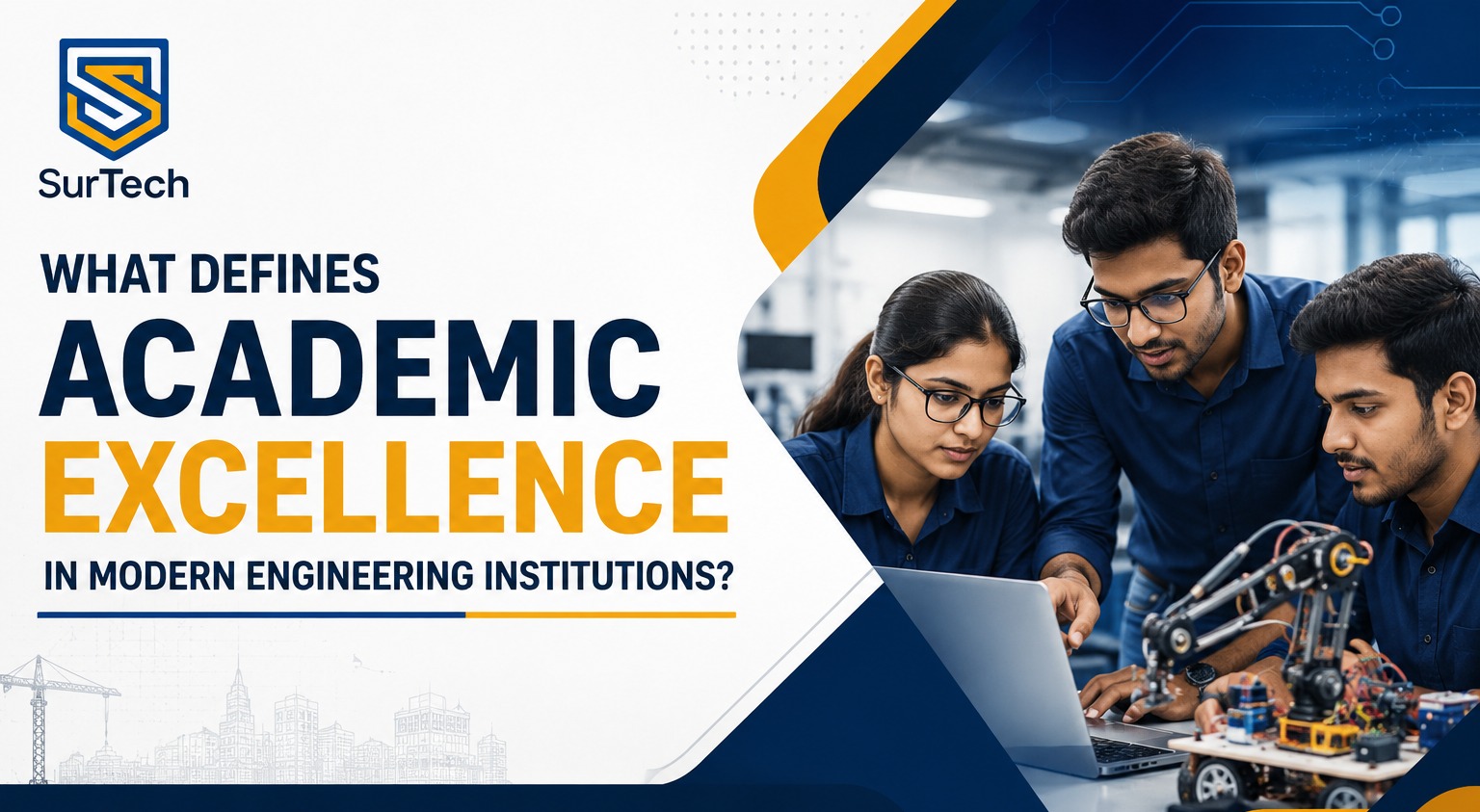
Choosing an engineering college is one of the most important decisions a student makes after Class 12. While factors like infrastructure, rankings, and placements often influence this choice, true academic excellence goes much deeper. A modern engineering institution is not defined by impressive buildings or promotional claims—it is defined by the quality of education it provides, the opportunities it creates for students, and the way it prepares graduates for an ever-changing world.
Today's engineering education is evolving rapidly. Technologies such as Artificial Intelligence (AI), Robotics, Electric Vehicles (EVs), Cybersecurity, Data Science, Renewable Energy, and Smart Manufacturing are transforming industries. As a result, engineering institutions must continuously update their teaching methods, curriculum, and learning environment to keep pace with these changes.
Students searching for the best engineering colleges in Kolkata often compare facilities, courses, and placement statistics. While these are important, academic excellence also depends on factors such as experienced faculty, research opportunities, innovation, practical learning, industry collaboration, and a culture that encourages curiosity and continuous improvement.
This article explores the qualities that define academic excellence in modern engineering institutions and explains what students should evaluate before making an informed admission decision.
Academic Excellence Is More Than High Examination Scores
Many people associate academic excellence with good grades. Although academic performance is important, modern engineering education focuses on much more than classroom examinations.
An excellent institution encourages students to understand concepts instead of memorising them. It creates an environment where learners ask questions, experiment with ideas, solve real-world problems, and apply theoretical knowledge in practical situations.
The engineering profession itself is built on innovation and problem-solving. Therefore, institutions should help students develop analytical thinking, creativity, teamwork, and adaptability alongside academic knowledge.
A Future-Focused Curriculum
Technology evolves quickly, and engineering education must evolve with it.
One characteristic shared by many best engineering colleges in Kolkata is their commitment to regularly updating academic programmes in line with industry requirements.
A modern engineering curriculum should include exposure to emerging fields such as:
-
Artificial Intelligence
-
Machine Learning
-
Data Science
-
Cybersecurity
-
Internet of Things (IoT)
-
Cloud Computing
-
Robotics
-
Renewable Energy
-
Electric Vehicle Technology
-
Sustainable Engineering
Learning these subjects helps students prepare for careers that continue to grow in demand.
Faculty Who Inspire Learning
Faculty members play a significant role in shaping an engineering student's academic journey.
Experienced teachers do more than explain textbook concepts. They guide research, encourage innovation, mentor projects, and help students understand how engineering principles are applied in real industries.
Students benefit when faculty members combine academic expertise with practical industry knowledge, enabling them to connect classroom learning with professional challenges.
Regular interaction with mentors also helps students build confidence and develop critical thinking skills.
Practical Learning Creates Better Engineers
Engineering is a practical discipline.
Understanding concepts becomes much easier when students have opportunities to apply them.
Modern institutions encourage hands-on learning through:
-
Laboratory experiments
-
Engineering workshops
-
Design projects
-
Industry case studies
-
Simulation software
-
Technical competitions
-
Capstone projects
-
Prototype development
These experiences strengthen technical understanding and prepare students for professional responsibilities.
Research and Innovation Matter
Engineering institutions should encourage students to think beyond existing solutions.
Research activities help learners explore new ideas, improve technologies, and contribute to solving real-world problems.
Students involved in research often develop:
-
Analytical thinking
-
Scientific reasoning
-
Technical writing
-
Problem-solving skills
-
Innovation mindset
Participation in conferences, research publications, patent development, and innovation challenges can significantly enhance the learning experience.
Strong Industry Connections
One of the defining characteristics of modern engineering education is meaningful collaboration with industry.
Many best engineering colleges in Kolkata establish partnerships with technology companies, manufacturing organisations, research laboratories, and startups.
These collaborations may provide opportunities such as:
-
Industrial visits
-
Guest lectures
-
Live industry projects
-
Internship programmes
-
Skill development workshops
-
Placement training
Such experiences help students understand workplace expectations before graduation.
Building Technical and Professional Skills Together
Employers today expect graduates to possess more than technical expertise.
Engineering professionals regularly work with multidisciplinary teams, clients, managers, and international partners.
Important professional skills include:
-
Communication
-
Leadership
-
Teamwork
-
Time management
-
Presentation skills
-
Critical thinking
-
Ethical decision-making
-
Adaptability
Institutions that integrate these skills into academic programmes prepare students more effectively for modern workplaces.
Modern Infrastructure Supports Better Learning
Infrastructure is not simply about large campuses.
A quality engineering institution should provide learning resources that support innovation and practical education.
Important facilities include:
-
Modern laboratories
-
Computer centres
-
High-speed internet
-
Digital libraries
-
Innovation labs
-
Incubation centres
-
Smart classrooms
-
Research laboratories
Access to updated technology allows students to gain practical experience with industry-standard tools and software.
Internships Bridge the Gap Between College and Industry
Internships allow students to experience professional work environments while still pursuing their degree.
During internships, students learn:
-
Workplace communication
-
Team collaboration
-
Project execution
-
Industry software
-
Professional ethics
-
Time management
These experiences often improve confidence and make students more prepared for campus placements.
Importance of Continuous Skill Development
Engineering graduates must continue learning throughout their careers.
Technology changes rapidly, making continuous skill development essential.
Students should actively participate in:
-
Online certification courses
-
Technical workshops
-
Coding competitions
-
Engineering seminars
-
National conferences
-
Hackathons
-
Innovation challenges
Lifelong learning helps professionals remain relevant throughout their careers.
Ethical Engineering Education
Academic excellence also includes developing responsible engineers.
Modern engineering institutions should promote values such as:
-
Professional ethics
-
Environmental responsibility
-
Social awareness
-
Inclusive innovation
-
Sustainable development
Engineering solutions should improve people's lives while considering environmental and societal impacts.
The Importance of Campus Culture
A positive academic environment encourages learning beyond textbooks.
Students often grow through participation in:
-
Technical clubs
-
Robotics teams
-
Student chapters
-
Entrepreneurship cells
-
Cultural activities
-
Sports events
-
Community service
Such activities improve leadership, teamwork, confidence, and interpersonal skills.
Placement Support Is One Part of Academic Excellence
Placement opportunities remain an important consideration for students.
However, strong placements are usually the result of quality education rather than the sole measure of institutional excellence.
Many best engineering colleges in Kolkata support students through:
-
Career counselling
-
Resume building
-
Aptitude preparation
-
Technical interview training
-
Mock interviews
-
Personality development sessions
These initiatives help students prepare for recruitment processes with greater confidence.
How Students Can Identify Academic Excellence
When evaluating engineering institutions, students should consider several important questions:
-
Is the curriculum regularly updated?
-
Are laboratories equipped with modern technology?
-
Does the institution encourage innovation and research?
-
Are internships integrated into the learning process?
-
Is there strong interaction with industry professionals?
-
Do faculty members actively mentor students?
-
Are students encouraged to participate in technical competitions?
-
Does the college support entrepreneurship and startups?
-
Are soft skills developed alongside technical knowledge?
Answering these questions provides a clearer picture than rankings alone.
Why Academic Excellence Matters in 2026
The engineering profession is changing faster than ever before.
Automation, Artificial Intelligence, digital manufacturing, smart infrastructure, and sustainable technologies are reshaping industries worldwide.
Graduates who possess technical knowledge, practical experience, adaptability, communication skills, and a mindset for continuous learning will be better prepared for future careers.
Academic excellence is therefore no longer limited to academic achievement—it reflects how effectively an institution prepares students to solve tomorrow's challenges.
Frequently Asked Questions
What defines academic excellence in an engineering institution?
Academic excellence combines quality teaching, updated curriculum, practical learning, research opportunities, industry exposure, ethical education, and continuous skill development.
Why should students research the best engineering colleges in Kolkata carefully?
Choosing the right institution influences learning quality, career development, practical exposure, internship opportunities, and overall professional growth.
Is infrastructure alone enough to judge an engineering college?
No. Infrastructure is important, but students should also evaluate faculty, curriculum, research opportunities, practical training, industry collaborations, and academic support.
How important are internships during engineering?
Internships help students gain practical experience, understand workplace expectations, and improve employability before graduation.
What skills do employers value most?
Employers typically look for technical competence, communication skills, teamwork, problem-solving ability, adaptability, and willingness to learn.
Conclusion
Academic excellence in modern engineering institutions is built on much more than examination results or campus facilities. It reflects the ability of an institution to create an environment where students develop technical expertise, practical experience, innovative thinking, ethical values, and professional confidence.
When searching for the best engineering colleges in Kolkata, students should evaluate the overall learning ecosystem rather than focusing on a single factor. A future-ready institution encourages research, industry engagement, interdisciplinary learning, and continuous skill development while preparing graduates to succeed in a rapidly changing technological landscape.
Ultimately, the right engineering college is one that not only helps students earn a degree but also equips them with the knowledge, skills, and mindset needed to build meaningful careers and contribute positively to society.